


Sept. 8, 2026
Criminal justice policy news and resources.
NCSL POLICY UPDATE
Criminal justice policy news and resources.
NCSL POLICY UPDATE

In this newsletter: Learn how data is shaping criminal justice policy, why crime perceptions often differ from crime trends and how states are approaching drug treatment courts.

Crime is down in many places, but public concern remains high. Jeff Asher says the disconnect often comes down to timing: Crime stories travel faster than crime data. Asher, co-founder of the data firm AH Datalytics, spoke at NCSL’s 2026 Legislative Summit about crime trends, the limits of crime statistics and the need for better, more current data.
► State Legislatures News: Crime Is Falling. So, Why Doesn’t It Feel That Way?
On this episode, we focus on how to use criminal justice data to better understand how a range of programs affect people in the justice system. We sat down with Mike Mueller-Smith, an associate professor of economics at the University of Michigan, and NCSL President Montana Sen. Barry Usher, chair of the Judiciary Committee.
► NCSL Podcast: Putting Data to Work in the Criminal Justice System
The majority of states have established statutory frameworks for drug court programs, though the specifics vary by state. Drug courts focus on individuals charged with or convicted of a crime who have been identified as having a substance use disorder. Participants enter supervised treatment and must meet intensive programmatic requirements. Learn more about how state law addresses funding, treatment and services, standards and best practices, eligibility and more.
► NCSL Brief: Drug Treatment Courts: A Legislative Primer
► Privacy and Oversight | Flock Safety tightens safeguards as states, cities question surveillance network (Stateline)
► License Plate Cameras | Legislators, governors and attorneys general in states across the country have recently acted or consider legislation that would impact automated license plate cameras, including: Alabama, Arizona, California, Colorado, Florida, Louisiana, Minnesota, Pennsylvania, South Dakota, Texas and Washington.
► Clearance Rates | Arnold Ventures Applauds Pennsylvania Legislature for Advancing Efforts to Solve More Violent Crimes Faster (AV Newsroom) | What is a clearance rate and how are legislatures using them to inform policy? (NCSL)
► Bail | Louisiana becomes fourth state to advance a bail-related constitutional amendment to voters in 2026 (Ballotpedia News) | 2025 End of Year Pretrial Legislation Recap (NCSL)
A new bipartisan documentary highlights an emerging, low‑cost strategy for transforming prisons: strengthening emotional intelligence among correctional leaders. In rare consensus, correctional officers, incarcerated individuals, wardens and academics demonstrate how this approach reduces harm, eases staffing shortages, improves recidivism, and lowers state costs. State leaders who host a watch party will receive a policy toolkit.
► Humans First Productions: Host a Watch Party
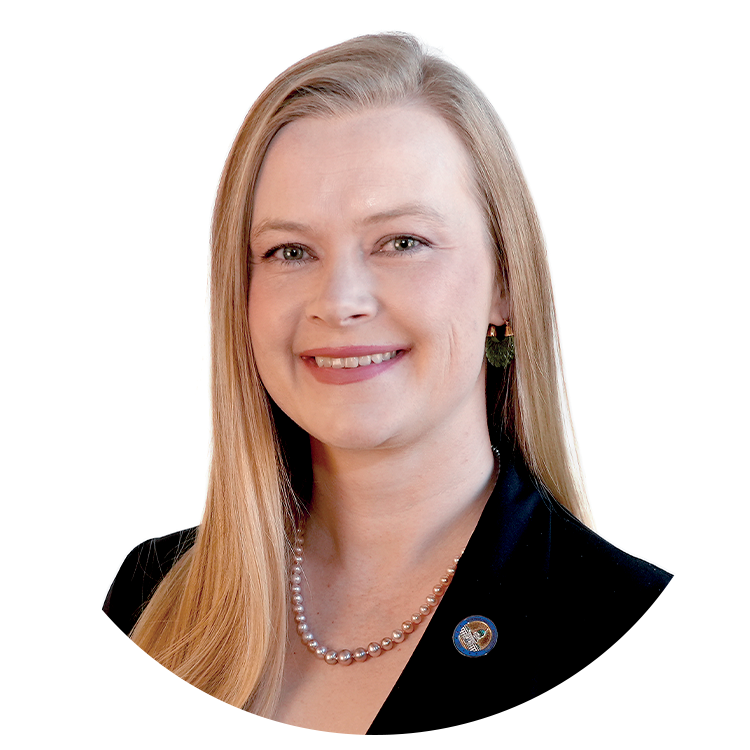
Amber Widgery
Program Principal, Criminal Justice
Virtual Events
Sept. 24 | What States Need to Know About the Head Start Proposed Rule
Sept. 24 | Town Hall: Childcare at a Crossroads
In-Person Meetings
Oct. 14 | Roundtable on Evaluating Economic Development Incentives
Professional Development for Legislative Staff
Sept. 13 | NLSSA Training Conference
Sept. 29 | NLPES Professional Development Seminar
Sept. 30 | NALIT Professional Development Seminar
Oct. 4 | ASLCS Professional Development Seminar

Every state legislator and staffer is a member of the organization and has complete access to the latest in bipartisan policy research, training resources and technical assistance tailored specifically to their needs.
About NCSL's Criminal Justice Program
The NCSL Civil and Criminal Justice Program tracks state legislative interests and actions on a wide range of topics that reflect the many aspects and functions of criminal justice systems. Most crimes fall under the jurisdiction of states, making criminal justice a significant responsibility and expenditure item for state and local governments. Learn about the program.
Articles from news sources are provided for information purposes only and do not reflect the views or policies of NCSL.
